Triblend vs CVC vs 100% Cotton: Which Works for DTF
Triblend, CVC, and cotton are not interchangeable for DTF because the polyester and rayon content in each blend changes your press temperature, dye migration risk, and how the finished print looks and feels on the fabric.
What Each Blend Actually Is
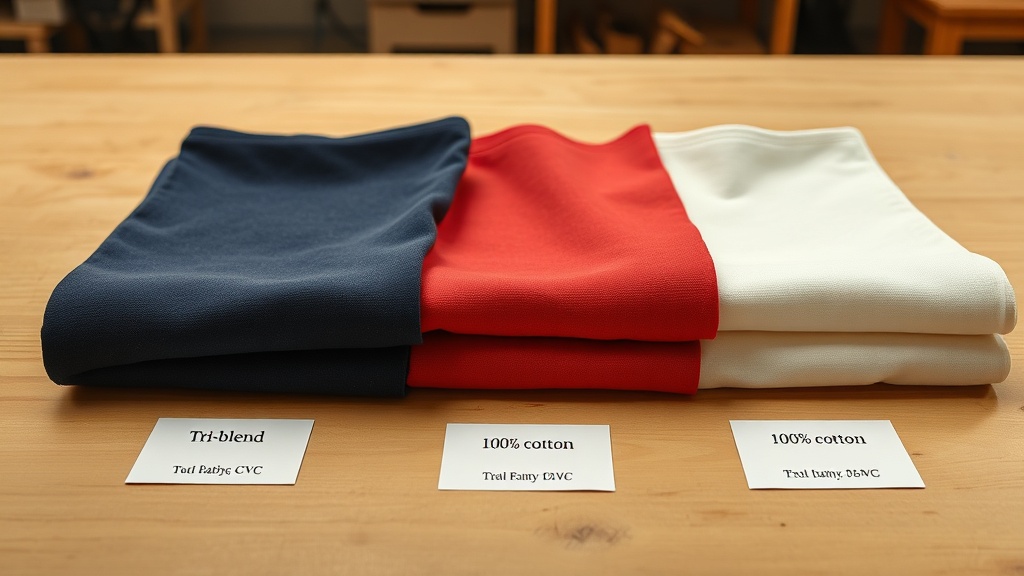
100% cotton is the simplest substrate for DTF. No blending, no dye migration risk, maximum compatibility with standard settings. Press at 315°F for 15 seconds and move on. CVC (chief value cotton) is typically 60% cotton, 40% polyester. The poly adds shape retention and reduces shrinkage but introduces moderate dye migration risk on light colors.
Triblend is typically 50% polyester, 25% cotton, 25% rayon (or similar ratios). The rayon adds a silky drape and soft hand feel. The high polyester content (50%) makes triblend one of the higher-risk substrates for dye migration in DTF, particularly on white and pastel colorways.
Dye Migration Risk by Blend
100% cotton: zero dye migration risk. Standard settings at 315°F, no poly blocker needed. CVC at 60/40: moderate risk on light colorways. Use poly blocker and drop to 295-305°F for light colors. Dark CVC: standard settings.
Triblend at 50/25/25 or similar: significant risk on white and light-color areas. Poly blocker is mandatory on any non-dark colorway. Press at 285°F for 12 seconds. The rayon content does not migrate but it does reduce the fabric's heat tolerance, making lower press temperatures beneficial for print longevity regardless of migration concerns.
Print Feel by Blend
DTF on 100% cotton has the most natural print integration. The adhesive bonds into the cotton fibers and the finished print feels soft and close to the fabric surface. The print hand is often described as screen print-like on fine-weave cotton.
DTF on triblend produces a slightly different print feel because the smoother, silkier surface of rayon and polyester does not provide the same fiber depth for adhesive penetration. The print sits slightly more on top of the surface, which is visible in the print hand and in the way the garment drapes in the print area.
Which to Default To
For most DTF applications, 100% cotton is the default for simplicity and reliability. CVC is the default when your customer needs reduced shrinkage or better shape retention. Triblend is the default when the retail aesthetic of the garment (drape, hand feel, vintage look) is the primary consideration and you are willing to manage the dye migration risk properly.
Never press a triblend in a light colorway without poly blocker and a reduced temperature. One failed batch of bleed-through on white triblend shirts will cost more in rework and replacement than a year's worth of poly blocker.
Sadie also wrote about