
Blank Hoodies: Weight, Fleece, Fit, DTF Behavior
Four decisions every hoodie order comes down to. We publish real numbers on each, so you can pick without guessing.
- Ships in 24 Hours
- No Minimums
- Wash-Tested Guarantee
Six hoodies across the weight and price spectrum.
From the 8 oz volume workhorse to the 9.5 oz midweight premium, each card links to the style detail with full color, size, and press spec data.
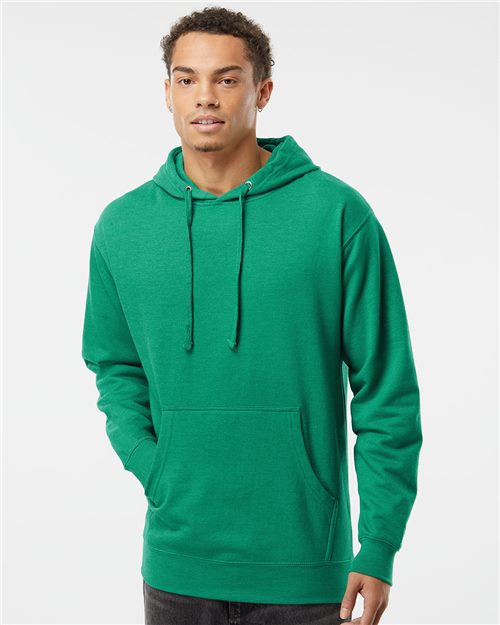
Independent Trading Co.
Unisex Midweight Hooded Sweatshirt
From $15.51
9.5 oz · Cotton-polyester fleece
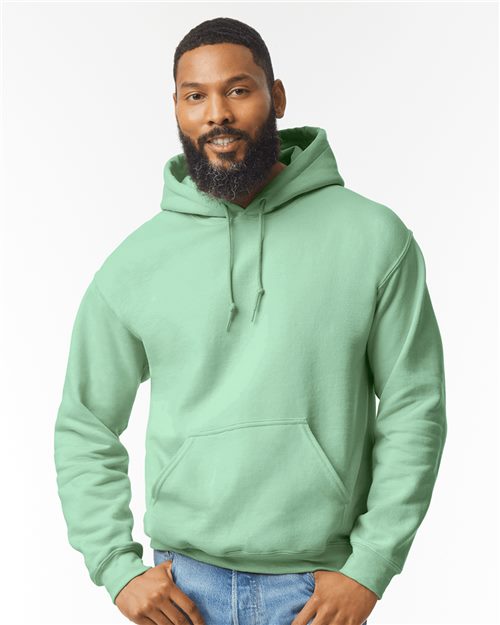
Gildan
Unisex Heavy Blend™ Hooded Sweatshirt
From $14.63
8.0 oz · Cotton-polyester blend
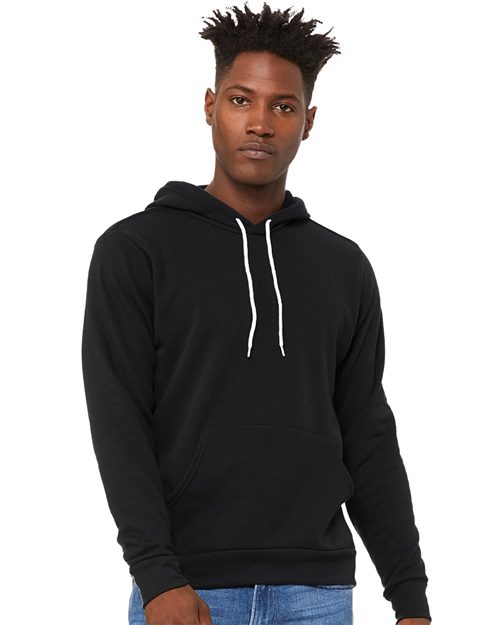
BELLA + CANVAS
Unisex Sponge Fleece Hoodie Sweatshirt
From $23.99
6.7 oz · Sponge fleece
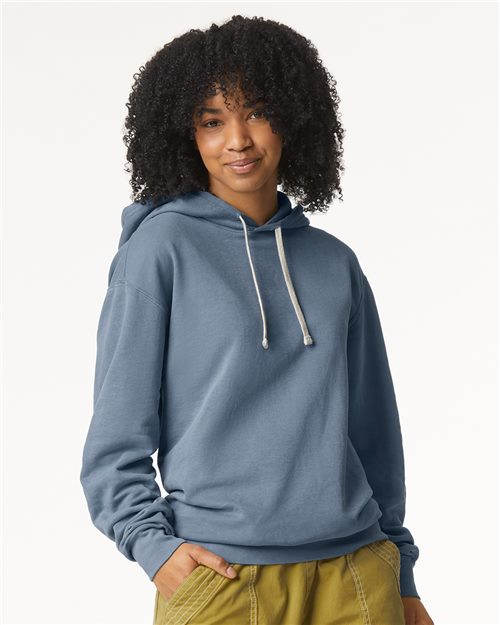
Comfort Colors
Unisex Garment-Dyed Lightweight Fleece Hooded Sweatshirt
From $25.23
8.5 oz · Garment-dyed fleece

Next Level
Unisex CVC Hoodie Long Sleeve T-Shirt
From $11.93
CVC cotton-poly blend
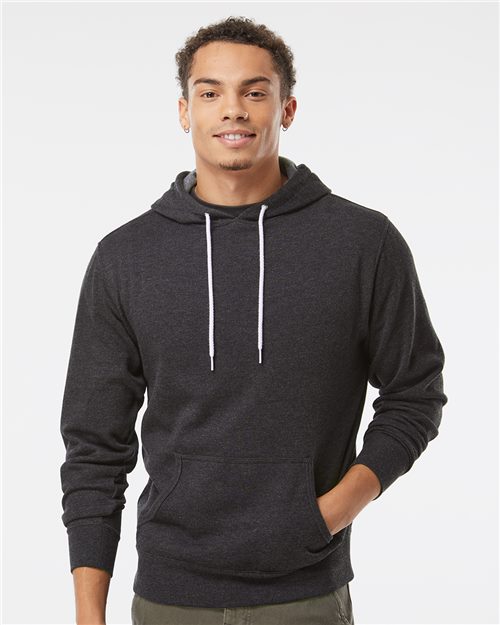
Independent Trading Co.
Unisex Lightweight Hooded Sweatshirt
From $25.20
7.0 oz · Lightweight fleece
Short version, straight from the floor.
Hoodies live or die on four decisions: weight (measured in oz per square yard), fleece composition (cotton, poly, blend, ring-spun), fit (unisex boxy, fashion, oversized, athletic), and how the fabric behaves under a DTF press. Every hoodie on this hub gets tagged with all four. If a competitor cannot give you those numbers next to the SKU, you are about to make an expensive guess.
Pressing DTF on a hoodie once instead of twice. First press at 300 F, 5 seconds, medium pressure flattens the fleece pile. Second press at 305 F, 12 seconds, firm pressure bonds the transfer. Skip the first press and the transfer sits on the pile and lifts at wash 4. This is the number one hoodie reprint we see.
Ordering a heavyweight hoodie for spring events. 14 oz heavyweight hoodies at a March 5K race become sweatshirts nobody wears again. Match the weight to when it is going to be worn. 8 to 10 oz is the four-season sweet spot. Save the 14 oz for winter drops.
Trusting the manufacturer weight spec on cheap fleece. Some low-cost hoodies list 10 oz on the spec sheet and arrive closer to 8 oz. Every hoodie on this hub is weighed by us at intake. Trust our number, not theirs. If the sheet says 9.8 oz on a 10 oz spec, we say 9.8 oz.
Skipping a swatch test on a poly blend before a volume run. Poly-cotton blends behave differently across brands. A blend that presses cleanly at 300 F on one hoodie can dye-migrate at the same temp on another. Order one hoodie, press one transfer, wash it three times before you commit to 200 units. Ten dollars saves you a thousand.
A production-floor definition, not a spec sheet.
Hoodies live or die on four decisions: weight (measured in oz per square yard), fleece composition (cotton, poly, blend, ring-spun), fit (unisex boxy, fashion, oversized, athletic), and how the fabric behaves under a DTF press. Every hoodie on this hub gets tagged with all four. If a competitor cannot give you those numbers next to the SKU, you are about to make an expensive guess.
The weight range that matters is 7 oz to 14 oz. Under 7 oz is a fashion crewneck or lightweight pullover, above 14 oz is a heavyweight streetwear piece. Between those two poles are the workhorse hoodies (Independent Trading SS4500 at 10 oz, Gildan 18500 at 8 oz, Bella+Canvas at ~10 oz). Pick the weight for the wearer's season, not the aesthetic that looked cozy in your reference photo.
Fleece composition drives everything downstream. A 100% cotton fleece feels luxe but shrinks and can feel wet after activity. A poly-cotton blend fights shrinkage and dries faster but presses cooler for DTF. Cotton fleece with a poly blocker in our ink layer holds DTF cleanly through 60 washes. Cheap unbranded fleece can bleed at wash 8. This is where the money you save on blanks costs you at reprint.
DTF behavior on hoodies has one non-negotiable rule: press twice. First press flattens the fleece pile, second press bonds the transfer. Skip the first press and the transfer sits on top of the pile and lifts within a wash. Every hoodie SKU on this hub carries the press-twice reminder in bold at the top.
The roles and jobs this hub actually serves.
- Apparel brand founders picking a hero hoodie for a launch drop (Journey 1).
- School and sports program buyers ordering spirit wear for teams and student sections (Journey 9).
- Corporate program buyers running staff hoodies for on-brand employee gifting (Journey 5).
- Streetwear brands producing capsule collections and wanting a heavyweight anchor piece.
- Print shops maintaining hoodie stock for winter and fall walk-in demand (Journey 3).
- Event coordinators ordering crew hoodies for festivals, tournaments, and content shoots.
Every hub connects to real product decisions.
These are the specific transfers, blanks, methods, and programs we would put next to this hub in a real production conversation. Not a link farm. Every row is a pairing we actually recommend.
Best-with brands
- Independent Trading SS4500
10 oz midweight. The default premium hoodie for boutique brand launches.
- Gildan 18500
8 oz, volume workhorse. School programs and corporate refreshes.
- Bella+Canvas Hoodies
3719 unisex, fashion fit. Streetwear-adjacent boutique.
- Blank T-Shirts Hub
Match the hoodie to your tee for a consistent capsule.
Best-with materials + decoration
- Cotton Fleece Guide
How fleece composition changes shrinkage, hand, and DTF behavior.
- DTF Transfers Hub
Press-twice technique documented for every hoodie fabric we stock.
- Embroidery on Hoodies
When to embroider a hoodie instead of pressing DTF.
- Screen Print vs DTF on Hoodies
The volume threshold where the math flips.
Method deep-dives
- DTF Transfers
Press-twice technique, temp windows, and fleece behavior in one place.
- Embroidery
The luxury tier for hoodie logos. Highest perceived value in fleece.
- Screen Printing
Bulk-run economics for hoodie programs above 144 units per color.
- Puff DTF
3D raised finish on hoodies for streetwear capsule drops.
Pick the hoodie. Pair the print. Ship together.
No account required. No minimums. Volume tiers auto-apply at checkout.
- Ships in 24 Hours
- No Minimums
- Wash-Tested Guarantee
Common hoodie mistakes we catch weekly.
Pressing DTF on a hoodie once instead of twice.
First press at 300 F, 5 seconds, medium pressure flattens the fleece pile. Second press at 305 F, 12 seconds, firm pressure bonds the transfer. Skip the first press and the transfer sits on the pile and lifts at wash 4. This is the number one hoodie reprint we see.
Ordering a heavyweight hoodie for spring events.
14 oz heavyweight hoodies at a March 5K race become sweatshirts nobody wears again. Match the weight to when it is going to be worn. 8 to 10 oz is the four-season sweet spot. Save the 14 oz for winter drops.
Trusting the manufacturer weight spec on cheap fleece.
Some low-cost hoodies list 10 oz on the spec sheet and arrive closer to 8 oz. Every hoodie on this hub is weighed by us at intake. Trust our number, not theirs. If the sheet says 9.8 oz on a 10 oz spec, we say 9.8 oz.
Skipping a swatch test on a poly blend before a volume run.
Poly-cotton blends behave differently across brands. A blend that presses cleanly at 300 F on one hoodie can dye-migrate at the same temp on another. Order one hoodie, press one transfer, wash it three times before you commit to 200 units. Ten dollars saves you a thousand.
The reading before you place the order.
Independent Trading SS4500 Buyer Guide
The hoodie brand founders default to, and why it earns the premium.
Hoodie Weight Guide
Every oz range explained with photos and wearer season.
Press-Twice Technique for Hoodies
The setup that turns 12-wash transfers into 60-wash transfers.
Fleece Composition and Shrinkage
Cotton, poly, blends, and what to expect after three washes.
Pick the hoodie. Pair the print. Ship together.
Hoodies and transfers ship on the same order. Volume tiers apply automatically as your cart grows.
- Ships in 24 Hours
- No Minimums
- Wash-Tested Guarantee